

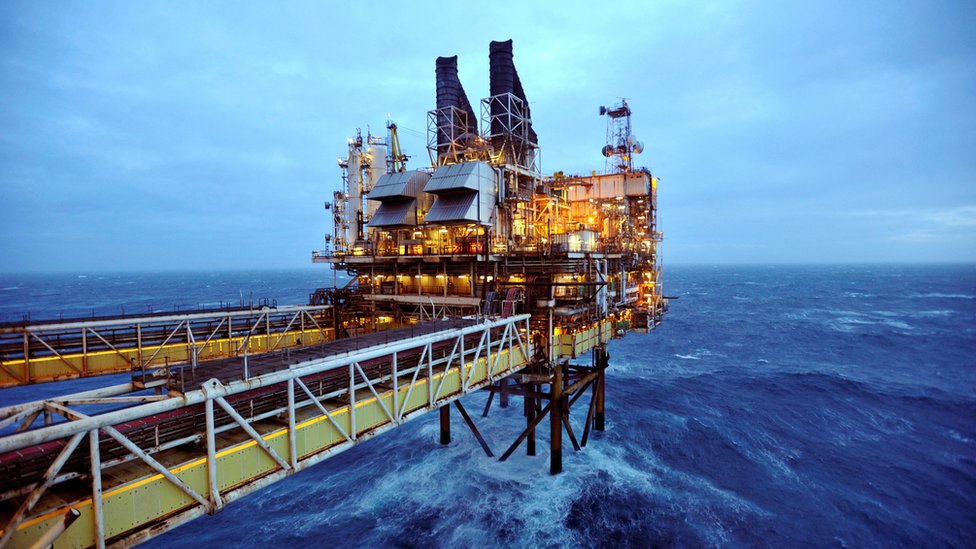
Offshore Energies UK is calling for an acceleration of consent for development of the Rosebank and Jackdaw energy projects highlighting in its response to ongoing public consultations submitted this week, their strategic importance to the UK’s energy security, economy and industrial future.
Rosebank which is located 80 miles out in the Atlantic to the West of the Shetland Islands, represents private sector investment of £8.7 billion and is the largest advanced energy project awaiting regulatory approval in the UK.
The Jackdaw gas field in the North Sea 150 miles East of Aberdeen, represents a further £2.1 billion with more than three-quarters of that investment in the UK.
The public consultations, which will run until 10th August 2026 for Jackdaw and 17th August for Rosebank, are part of the regulatory process required before Rosebank can commence production.
They follow two years of continuing uncertainty after both projects were given full approval by the Conservative government in 2022 for Rosebank and 2023 for Jackdaw. A total of £3 billion has already been invested in preparations for each of them.
This uncertainty has stifled investment in domestic oil and gas and led to increasing reliance on imports.
Independent forecasting shows the UK will still be using the equivalent of up to 15 billion barrels of oil and gas in 2050.
In its responses to the two public consultations, Offshore Energies UK, the major trade body representing more than 450 organisations involved in North Sea energy from oil, gas and offshore wind to carbon capture and hydrogen production, points out that if we do not produce this oil and gas from our own domestic resources, we simply import more which involves a carbon footprint up to four times higher.
Together, Rosebank and Jackdaw will support:
- £28.7 billion in Gross Value Added across their producing lifespans.
- £9.1 billion in supply-chain activity.
- £1.4 billion in tax revenues before the end of this Parliament, rising to £3.8 billion before the expected end of the next Parliament in 2034.
- More than 3,500 jobs at peak construction.
- 880 high-quality jobs sustained throughout production, paying an average salary of approximately £85,850.
- At least 125 apprenticeships, helping to build the workforce required for both the North Sea and the wider energy transition.
Rosebank is also expected to provide long-term work for ports, fabricators, manufacturers, engineering firms, vessel operators and specialist energy businesses across the UK.
Almost 200 contracts have been placed with UK energy supply chain companies, most of them across north-east Scotland, Fife, the Highlands and north-east England. Rosebank-related activity is also supporting Lerwick Port in Shetland.
The two projects which have a lifespan of 25 years for Rosebank and 11 years for Jackdaw, will use state of the art extraction methods which will reduce their carbon emissions to around half the North Sea average.
They will make a material contribution to UK energy security, providing 10% of UK domestic natural gas production and 10% of UK oil output at peak production.
David Whitehouse, chief executive of Offshore Energies UK said:
“Permission for these two projects would help clear the log jam preventing development of other projects in the North Sea.
“These projects are coming at a time when domestic gas production is declining and import dependence is growing, even as we increase production of energy from wind and other renewables.
“UK production meets only 39% of UK gas demand according to latest figures, and without new investment, the UK’s reliance on imported gas will continue to increase.
“This matters because UK gas demand is expected to remain broadly unchanged over the next decade, according to forecasts from the National Energy System Operator (NESO).
“A positive decision on Rosebank and Jackdaw will play a part in restoring investor confidence, demonstrating that the revised regulatory regime is functioning effectively. We need a regulatory framework that enables projects to move forward.
“However, to unlock the wider pipeline of 111 offshore energy projects needed to support domestic production, jobs, tax revenues and economic growth, the accelerated implementation of the Oil and Gas Revenue Levy (OGRL) is required – a permanent windfall tax which is triggered during periods of high prices and is essential to boost investment in the North Sea.”