

Capital Maritime Finance Corp. (CMF) is launching Greece’s first shipping IPO, with all of its shares to be exclusively listed on Euronext Athens.
The move also marks the first major step towards establishing Athens as a strong global shipping hub.
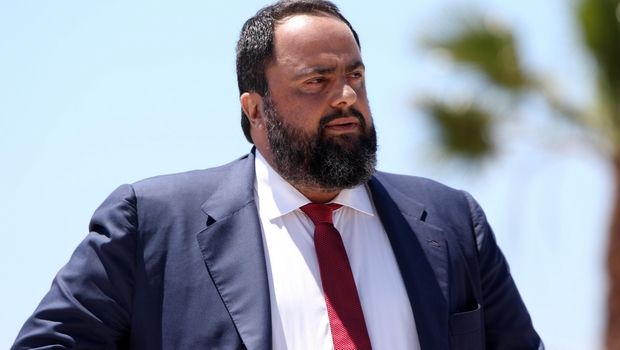
According to sources, the company, owned by interests linked to Evangelos Marinakis, is targeting proceeds of up to €200 million through the IPO, with the funds earmarked to finance its newbuilding programme and meet working capital needs.
CMF’s offering combines long-term growth with investment value through a business plan focused on acquiring containerships and other vessel types backed by long-term charters. With long-term charters already secured with reliable top-tier charterers, the company benefits from strong revenue visibility and predictability regardless of market cycles, enabling it to deliver consistent returns to shareholders.
Key fleet and operating model characteristics
- High revenue visibility:100% of the fleet’s available capacity is fully contracted, providing 100% coverage of vessel days through 2034. Total contracted backlog stands at $3.9 billion, with the average remaining charter duration reaching 9.5 years (as of June 30, 2026).
- Top-tier blue-chip charterers:Charters are based on long-term “take-or-pay” contracts with leading global liner shipping companies, including CMA CGM, the world’s third-largest liner company, with contracts worth nearly $3 billion with CMF, and Unifeeder, a subsidiary of DP World, with contracts worth nearly $1 billion with CMF (as of June 30, 2026).
- Young, technologically advanced fleet: The company has a state-of-the-art fleet that will comprise 36 containerships once fully delivered. The fleet currently includes 13 vessels in operation and 23 under construction. Its weighted average age is expected to be just two years upon full delivery, making it one of the youngest and most efficient fleets globally.
- Top professionals – three generations at sea: The company is staffed by highly experienced and specialised professionals whose expertise spans three generations, underpinned by professionalism, consistency and reliability.
- Cutting-edge technology and dual-fuel LNG capability: The fleet comprises 26 feeder vessels with capacity ranging from 1,800 to 2,900 TEU and 10 Neo-Panamax vessels with a capacity of 8,800 TEU and dual-fuel LNG capability. The ability to use LNG, bio-LNG and e-LNG significantly reduces emissions. The fleet’s advanced technologies enable the company to fully comply with the most stringent environmental regulations, including IMO CII, EU ETS and FuelEU Maritime. At the same time, the fleet incorporates technologies that enable CMF to achieve significant operating cost savings. The majority of CMF’s vessels are rated in the top “A” category under the CII index.
Strong financial profile and attractive dividend policy
- Fully funded investment programme:Of the company’s remaining $1.9 billion capital expenditure programme through 2028, $1.6 billion is covered by bank financing (as of June 30, 2026). The remaining amount is planned to be funded organically through operating cash flow, combined with the estimated net proceeds from the public offering.
- Attractive dividend yield: Management has adopted a dividend policy aimed at providing shareholders with consistent and recurring returns, with distributions based on Adjusted Net Income on a quarterly basis. The policy is supported by secured cash flows, with distributions targeted to begin in the first quarter of 2027.
Highly favourable fundamentals in the sector
- Ageing global fleet: In the segment of vessels with capacity below 3,000 TEU, 50% of the existing global fleet is expected to be more than 20 years old by 2029. The corresponding figure is 32% for vessels with capacity of 8,000–12,000 TEU. This structural shortage of modern vessels in the relevant segments is expected to generate strong demand for CMF’s new and modern fleet.
- Growth of alternative regional trade routes: The diversification of supply chains away from China is driving growth in selected regional routes, with annual growth rates estimated at up to 5.5% in 2027. This trend is expected to significantly increase demand for flexible feeder and mid-sized vessels, which make up CMF’s fleet.
- Tightening environmental regulations: IMO regulations on energy efficiency and carbon intensity, including EEXI and CII, as well as EU regulations such as EU ETS and FuelEU Maritime, are increasing the operating and regulatory costs of older, less efficient vessels and are expected to accelerate their retirement. Given CMF’s young average fleet age, including its 10 LNG dual-fuel vessels, the company expects its fleet to face comparatively lower regulatory costs, strengthening its competitive position.
Source: Naftemporiki