

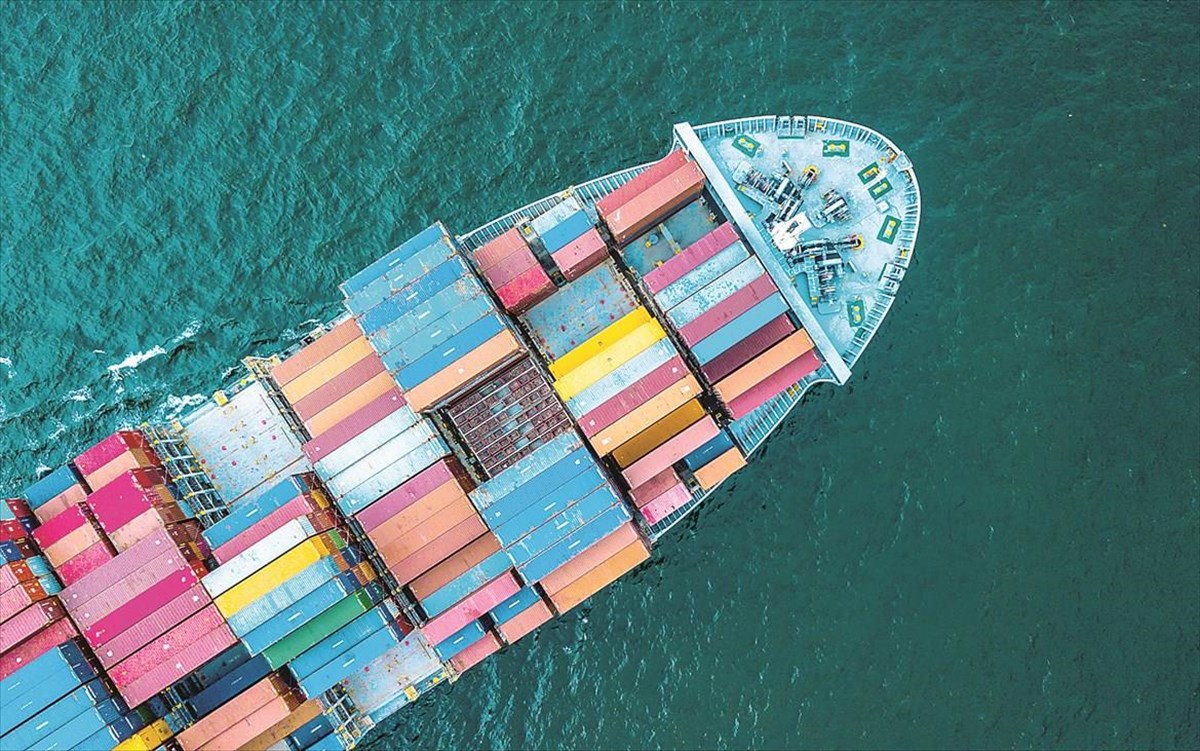
A new wave of increases in container freight rates has been recorded after three consecutive weeks of decline. A sharp rise in marine fuel prices has been triggered by developments in the Strait of Hormuz.
As a result of this volatile situation, transportation costs are now being passed directly on to consumers. At the same time, weak demand and excess capacity continue to exert pressure on the container shipping market.
The increase in freight rates is mainly attributed to higher charges on Asia–US and Asia–Europe routes, where the Drewry World Container Index (WCI) rose by 3% to 2,286 dollars per 40-foot container, following three consecutive weeks of declines.Spot freight rates from Shanghai to Rotterdam increased by 2% to 2,170 dollars per 40-foot container, while rates to Genoa rose marginally by 1% to 3,075 dollars per 40-foot container. Freight rates from Shanghai to New York increased by 7% to 3,721 dollars per 40-foot container, while the Shanghai–Los Angeles route recorded a 5% increase to 3,062 dollars per 40-foot container.
Shipping lines
It is noted that liner operators began increasing container surcharges from early May, a trend followed by other carriers, as energy costs for shipping companies rose rapidly due to the crisis in the Persian Gulf and the effective disruption of the Strait of Hormuz since late February.
MSC Mediterranean Shipping Company raised its Emergency Fuel Surcharges (EFS) on the Asia–US East Coast (USEC) route from 430 dollars to 644 dollars per 40-foot container, and on the Asia–US West Coast (USWC) route from 272 to 467.
In an interview with BBC News, Vincent Clerc warned that even if the Strait of Hormuz reopens, normalization of global cargo flows will not be immediate.
“Whether the Strait of Hormuz reopens in the coming days or months, it will have a limited impact on cargo flows,” he said, explaining that the crisis has already caused severe disruptions to supply chains, energy costs, and shipping companies’ planning.
He also revealed that the company’s fuel costs have almost doubled since the beginning of the crisis, burdening Maersk by up to 500 million dollars per month, a cost which is now being passed on to customers through higher freight rates.
At the same time, he left open the possibility of reactivating the U.S. “Project Freedom” initiative for the safe evacuation of vessels from the Persian Gulf in the event of renewed escalation.
AP Moller–Maersk initially opposed vessel transits through the region but changed its position following consultations with the U.S. Navy.
It is also noted that weak demand and excess capacity continue to weigh on the container shipping market.
New Freight All Kinds (FAK) rates for Asia-to-Northern Europe and Mediterranean routes, effective from May 15, have been announced by CMA CGM, Hapag-Lloyd, and MSC Mediterranean Shipping Company.
Source: Naftemporiki