

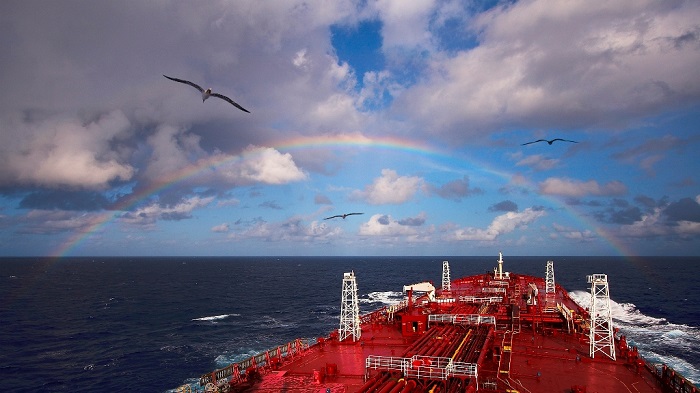
Greece’s dominance in the tanker sector is confirmed by Veson Nautical annual report for 2025, as one in four ships under construction is of Greek interests.
There is also a return of the “Greeks” to LNG Carriers with 18 new orders, taking the top spot in the global ranking for the first time since 2021. As noted, Greek shipowners are once again emerging as a key player, maintaining a leading presence both in terms of fleet and investment activity in all segments.
At the same time, analysts characterize 2025 as a year of intense contrasts, with geopolitical turmoil, regulatory pressures and changing trade flows creating a complex environment for shipowners and investors.
Leadership
The tanker sector was one of the most characteristic indicators of market fragmentation.
According to Veson Nautical, crude tankers (VLCC, Suezmax, Aframax) recorded resilience and increased values, in contrast to product tankers which were strongly pressured by the sluggish clean products market.
Greek shipowners maintained the first place worldwide in new tanker orders in 2025, covering more than a quarter of the total orderbook, confirming the strategy of commitment to this sector.
Despite the decrease in overall shipbuilding activity compared to 2024, Greek shipowners remained active, focusing on modern ships with high environmental standards.
Specifically, as shown by Veson Nautical data, Greece remained in 1st place in tanker orders, representing approximately 25%-27% of the total tanker orderbook, with 91 orders (out of a total of 291).
Greek orders were mainly focused on Aframax and Suezmax, with a significant number of dual-fuel or LNG-ready vessels.
At the same time, Greek shipowners were also at the top of second-hand crude tanker markets, taking advantage of the volatility of values and the increased demand for tonne-miles.
Greece also ranks second in S&P transactions with 101 purchases, up from 68 last year (an increase of approximately 49% on an annual basis).
Greece’s image in the LNG carrier sector is of particular importance, since despite a difficult year for freight rates and values, due to oversupply of ships and delays in new LNG projects, it emerged as the most active country in LNG ship purchases in 2025.
Based on the report’s data, shipowners invested in a targeted manner, taking advantage of the correction in values, with the aim of long-term positioning in a strategic energy sector.
As reflected in the report, the Greeks shipowners covered approximately 20% of total second-hand transactions in the sector, while in the orderbook Greece ranks at the top (18 new orders), confirming the long-term strategic positioning in the energy transition.
Strong presence
In the bulk carrier sector, Greece ranks second worldwide in terms of the number of active vessels (2,379), behind China (2,995).
According to Veson Nautical, 2025 was characterized by an appreciation of values, mainly in Capesize, due to the prolonged bypasses via the Cape of Good Hope that increased ton-miles.
However, Greek shipowners adopted a more cautious attitude to new orders (175 ships in the Greek orderbook), with a limited orderbook, which reflects strategic maturity and adaptation to an environment of increased uncertainty.
On the contrary, the “Greeks” were particularly active in the secondary market (168 purchases), mainly in Capesize and Kamsarmax, investing countercyclically in view of the improvement in freight markets in the second half of the year.
Second-hand
As for containerships, 2025 was characterized by strong demand in the secondary market, mainly for small and medium-sized ships, due to limited supply and stable freight rates.
Although Greece is not at the top of the countries leading new orders, Greek companies maintain a significant presence in the purchase and sale of second-hand ships, taking advantage of opportunities arising from market volatility.
In fact, Greece is among the five most active countries in the second-hand containership markets (25 ships).
At the same time, the feeder containership sector was a “driver” of Greek investments, as smaller ships have experienced renewed interest in recent years, mainly due to the regional development of commercial networks.
Mixed picture
The LPG carrier sector has seen sharp fluctuations, with very large vessels (VLGCs) showing resilience, while medium-sized vessels were pressured by lower freight rates.
The Greek presence in the sector remains more limited compared to other sectors.
Source: Naftemporiki