

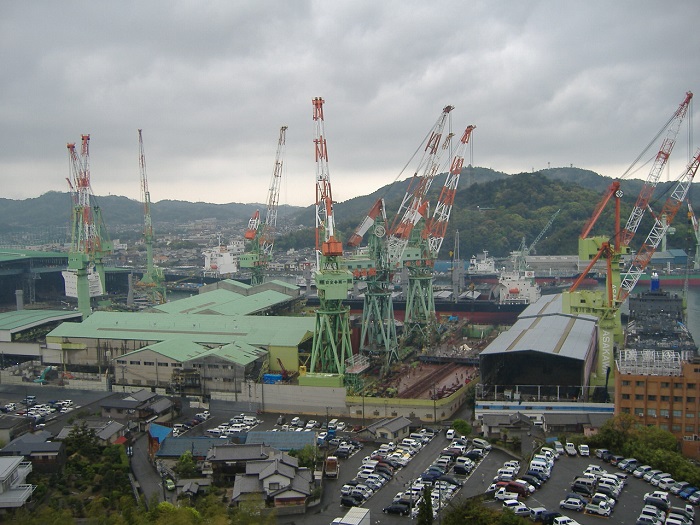
Imabari Shipbuilding, Japan’s largest shipbuilding company, is set to acquire additional shares in Japan Marine United (JMU), aiming to make it a subsidiary and secure management control. This strategic move, announced on June 26, will see Imabari increase its stake from 30% to 60%, positioning the combined entity to challenge global competitors with an estimated annual construction volume approaching 5 million gross tons (GT).
The acquisition comes amid a backdrop of declining market share for Japan’s shipbuilding industry, which has seen a significant drop in construction volume over the past five years. In 2023, Japan’s shipbuilding output was recorded at 10.05 million GT—a stark 31% decrease compared to five years ago. Meanwhile, China’s shipbuilding volume surged by approximately 30% to reach 31.48 million GT, and South Korea’s increased to 18.35 million GT during the same period.
Imabari Shipbuilding ranked sixth globally last year with a construction volume of 3.28 million GT, while JMU ranked twelfth with 1.41 million GT. The combined volume of these two companies would surpass South Korea’s fourth-ranked Hanwha Ocean, which stands at 3.7 million GT, marking a significant shift in the competitive landscape.
In explaining the rationale behind this acquisition, Imabari Shipbuilding stated, “We determined that strengthening competitiveness is necessary to respond to the increasingly intense global market environment.” The company emphasized that Japan’s shipbuilding market share has significantly declined against China and South Korea and expressed confidence that both companies will leverage their strengths to contribute to the development of Japan’s shipbuilding industry.
By making JMU a subsidiary, Imabari aims not only for equity acquisition but also for achieving economies of scale in design, material procurement, and component purchasing—key strategies to counteract the low-cost production methods employed by Chinese and Korean shipyards. Joint procurement of materials such as steel and engines is expected to yield cost reduction benefits.
Furthermore, Imabari plans to expand its business domain into warships and special-purpose vessels by leveraging JMU’s track record with the Japan Maritime Self-Defense Force. This expansion reflects the strategic importance of maintaining robust maritime capabilities amid growing concerns about economic security in the shipbuilding industry.
Nikkei noted that this move would allow Imabari Shipbuilding and JMU to secure a scale close to that of second-ranked South Korea’s HD Hyundai (6.14 million GT) and third-ranked Samsung Heavy Industries (5.61 million GT). The acquisition is also analyzed as being influenced by economic security considerations as they become focal points in tariff negotiations with major trade partners like the United States.
In Japan, this acquisition is seen as a potential turning point for reviving its domestic shipbuilding industry within a global market dominated by China and South Korea. As technological advancements and environmental regulations continue to shape the industry landscape, Imabari Shipbuilding’s strategic consolidation with JMU represents an effort not only to regain competitiveness but also to adapt proactively to these evolving challenges.
Source: BusinessKorea